Mountain Appliance Guide
A Homeowner's Guide to Appliances at 7,000 Feet
From orange gas flames to overworked compressors, elevation quietly reshapes how every appliance in a foothills kitchen behaves. Here is the science, and what a proper mountain repair actually addresses.
The Physics of Thin, Dry Mountain Air
Owning a premium kitchen in the Colorado foothills means living with a fact the manufacturers rarely print in the manual: your appliances were engineered at sea level, and your house sits more than a mile above it.
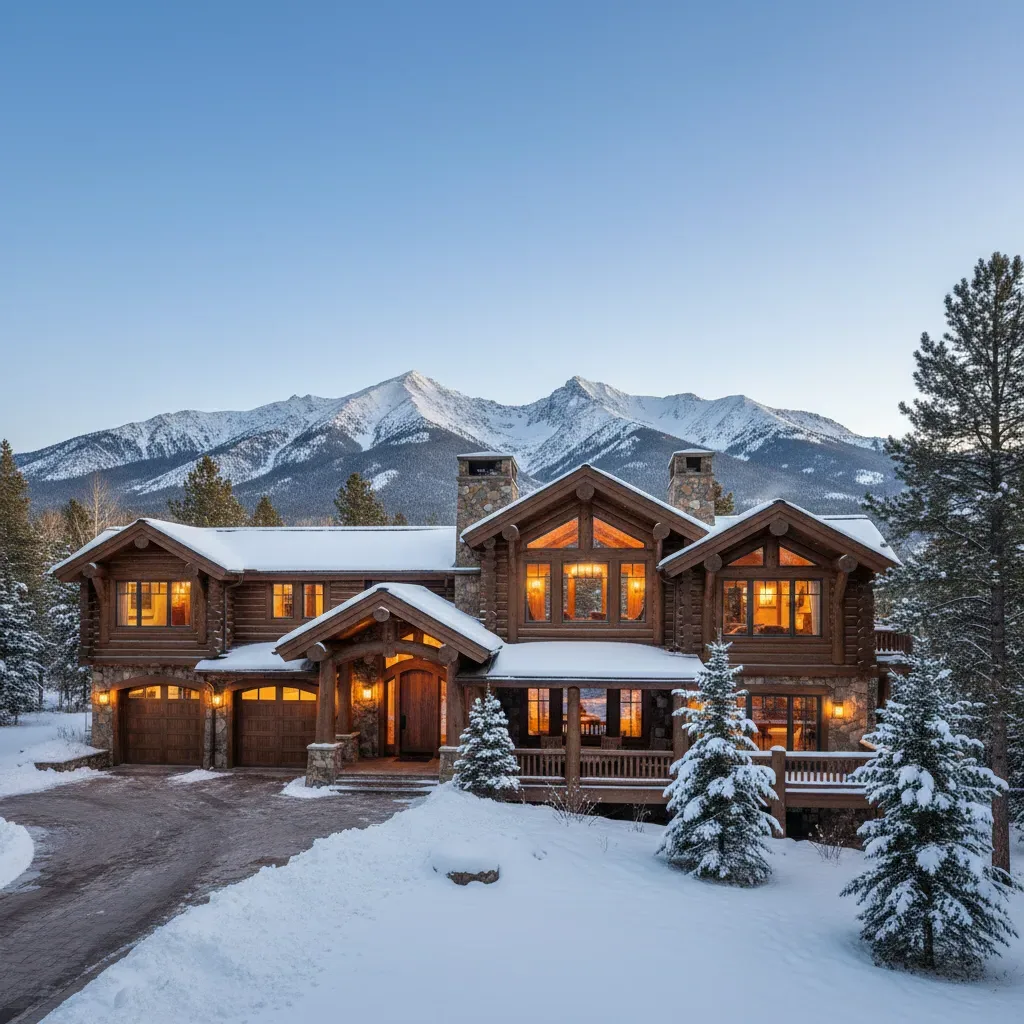
Evergreen sits at 7,220 feet. Conifer climbs to 8,277, Genesee to 7,800, Bailey to 7,750. At these elevations the air holds roughly 24 percent less oxygen than it does in the coastal factories where ranges, ovens and refrigerators are built and bench-tested, and the atmospheric pressure that drives combustion, boiling and heat exchange drops right along with it. Water boils near 198 degrees instead of 212. A burner that mixes air and gas perfectly at sea level is suddenly starved for oxygen. A sealed refrigeration system tuned for dense, humid air has to do its job in air that is thin and bone dry. None of this means the appliance is broken. It means it is being asked to run outside the conditions it was designed around.
Four forces shape how equipment ages up here, and they compound one another. Thin air changes combustion and cooling. Dry air hardens the rubber and plastic that seal doors and gaskets. Wide daily temperature swings, a frozen morning followed by a sun-baked afternoon, cycle every component through expansion and contraction. And mountain power, carried on long lines through the I-70 and Highway 285 corridors, arrives with the flickers and surges that come with winter storms. Understanding each one is the difference between chasing symptoms and fixing the cause.
Why Gas Flames Turn Orange Above 7,000 Feet
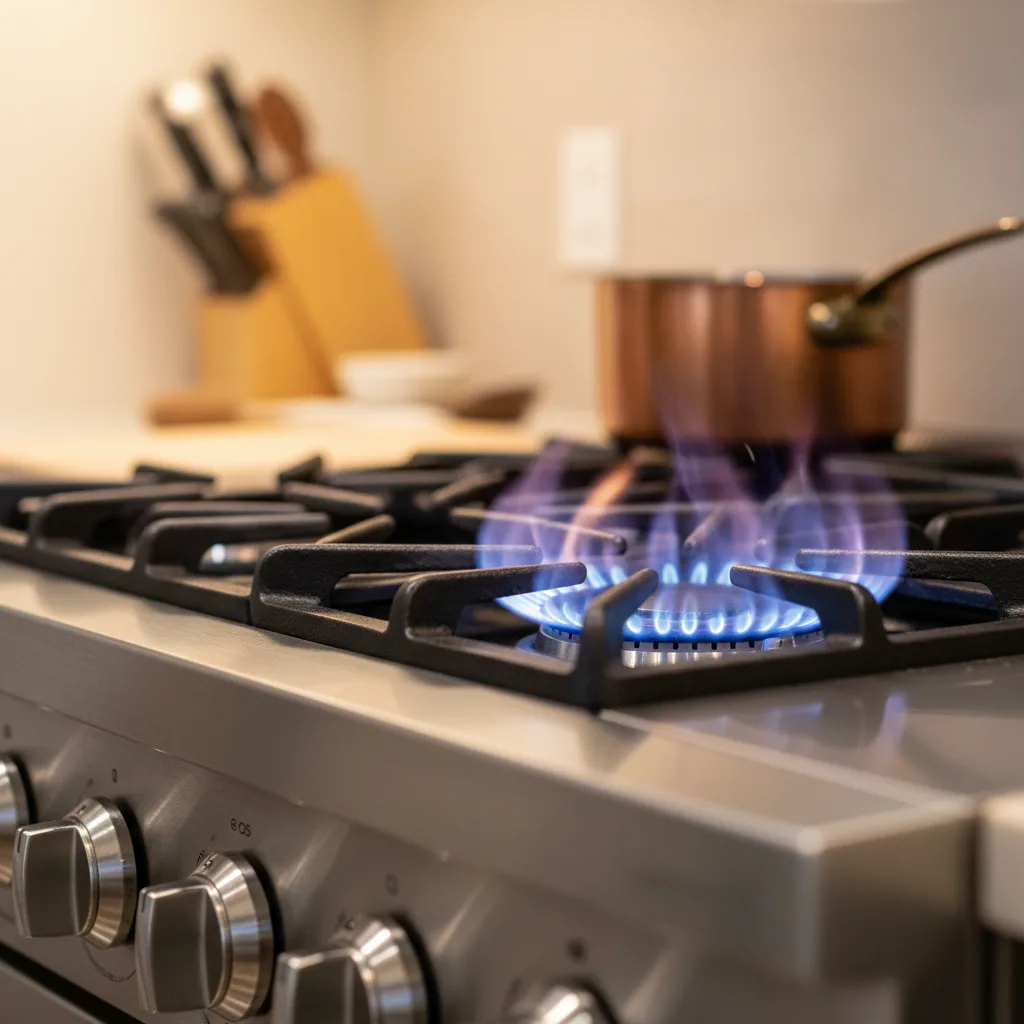
A gas flame is a balancing act between fuel and oxygen, and that balance is set at the factory by a tiny brass orifice that meters how much gas reaches each burner. At sea level the orifice is sized for dense, oxygen-rich air. Move that same range to 7,220 feet, where a quarter of the oxygen is simply gone, and the mixture runs rich: too much gas, not enough air. You see it as a lazy orange flame instead of a tight blue cone, and you smell it as soot. Behind the scenes the effects are worse. BTU output falls, so pots take longer to boil and ovens crawl through preheat; unburned carbon cakes onto burner ports and oven interiors; and combustion sensors and safety valves, reading a flame that looks wrong, can cut the fuel early and leave you with a burner that will not stay lit.
The remedy is altitude conversion, and it is not cosmetic tinkering. It is how the appliance is supposed to be set up for where it lives. We carry orifice conversion kits and swap the jets to the correct size for your exact elevation, then tune the air shutters and verify the flame, the BTU delivery and the safety-valve response. A properly converted range near 8,000 feet burns clean blue, preheats on schedule and stops sooting your cookware. Most of the 'defective from new' ranges we are called out to inspect in the foothills were never defective at all. They simply shipped with sea-level jets.
Appliance by Appliance, What Elevation Changes
Every category in a high-end kitchen answers to altitude a little differently. Here is what shifts, and what a proper mountain repair covers.
| Appliance | What changes at altitude | What we do |
|---|---|---|
| Gas range & cooktop | Rich mixture, orange flames, lost BTU, sooty burners | Fit altitude orifice kits, tune air shutters, verify combustion |
| Gas & convection ovens | Slow preheat, uneven bake, early safety-valve cutoff | Convert jets, calibrate the thermostat, check ignition and sensor |
| Refrigerators & freezers | Dry air stiffens gaskets; sealed system fights thin air and temp swings | Reseal doors, verify charge, clean condensers, test the compressor |
| Dishwashers | Hard well water scales jets and heaters; lower boiling point weakens drying | Descale wash arms and elements, clear jets, check the vent and heater |
| Ice makers | Mineral scale clouds cubes and jams harvest; the freeze cycle shifts | Descale the mold and lines, calibrate the cycle, replace worn valves |
| Steam ovens & coffee systems | Scale from mineral water clogs reservoirs, pumps and boilers | Descale and flush the water circuit, replace seals, advise on filtration |
What Thin, Dry Air Does to Refrigeration
Refrigeration is the category homeowners least expect altitude to touch, and the one where it does the most quiet damage. A sealed system moves heat by compressing and evaporating refrigerant, then sheds that heat into the surrounding air across a condenser coil. Thin mountain air is a poorer heat carrier than the dense air the system was rated in, so the compressor runs longer and hotter to hold the same box temperature. Up here it is often doing that in a garage or outbuilding where afternoon-to-night swings of 40 degrees are routine. Longer run times mean more wear on the compressor, the start relay and the fans.
The dry air attacks from the outside. Mountain humidity often sits in the teens, and that arid air pulls the plasticizers out of door gaskets, which harden, shrink and crack years earlier than they would in a humid climate. A gasket that no longer seals lets warm air leak in, so the compressor runs even more, frost builds where it should not, and the whole system spirals downward. When we service a mountain refrigerator we treat the gasket, the condenser airflow and the sealed-system charge as one connected problem, because at this elevation they usually are.
Four Seasons of Mountain Wear
Appliances in the foothills do not fail at random. They fail on a calendar that follows the weather.
Winter — Storms & Surges
Heavy snow along I-70 and Highway 285 brings outages, brownouts and the surges that follow when power snaps back. Those spikes are what kill control boards, compressor relays and electronic ignition modules. We run surge-aware diagnostics and hold priority slots for storm emergencies.
Deep Winter — Cold Starts
A refrigerator or freezer parked in an unheated garage can drop below its own thermostat's working range, confusing the controls and stalling the compressor. Cold, stiff gaskets seal poorly and door hinges bind. We diagnose garage-kit needs and cold-weather control faults.
Spring — Runoff & Hard Water
Snowmelt loads mountain wells with minerals, and harder water accelerates scale in dishwashers, ice makers, steam ovens and coffee systems. Spring is when filmed glassware and cloudy ice tend to show up. We descale the water circuits and give an honest read on filtration.
Summer — Heat & Condenser Load
High-altitude sun is intense, and a condenser coil clogged with a winter's worth of dust and pet hair cannot shed heat in thin summer air. Sealed systems overheat and short-cycle. A summer condenser cleaning and charge check heads off a July breakdown.
Signs the Altitude Is Working Against Your Appliance
If several of these sound familiar, elevation is almost certainly a factor, and it is fixable.
- Gas burners that glow orange or yellow instead of blue, or leave soot on your pots
- Ovens and ranges that take far longer to preheat than the manual promises
- A burner that lights, then dies a few seconds later as the safety valve cuts the fuel
- A refrigerator or freezer running almost constantly, especially in a garage or outbuilding
- Door gaskets that feel stiff or cracked and no longer grip a dollar bill placed in the seal
- Cloudy ice cubes, filmed glassware, or a coffee system that has slowed to a trickle
- Any control panel that went dark or erratic right after a winter storm or power flicker
Quick Answers
How does high altitude affect kitchen appliances?
At 7,000-plus feet the air holds about 24 percent less oxygen and far less moisture than at sea level. That makes gas burners run rich and orange, forces refrigeration compressors to work harder in thin air, and dries out door gaskets years early. Winter storms add power surges that damage control boards. Every one of these is correctable with altitude-specific tuning and parts.
Do gas ranges and cooktops need altitude conversion in the Colorado foothills?
Yes. A gas range shipped with sea-level orifices runs rich above 7,000 feet, which shows up as orange flames, soot, lost BTU and early safety-valve shutoffs. Converting the orifices and tuning the air-fuel mix for your exact elevation fixes it. Evergreen Viking Repair carries the kits and calibrates on site; call (720) 790-9436 to book a visit.
Why do refrigerator door gaskets fail faster in the mountains?
Mountain humidity often sits in the teens, and that dry air pulls the plasticizers out of gasket rubber, so it hardens, shrinks and cracks far sooner than it would in a humid climate. A failing gasket leaks warm air and overworks the compressor. We reseal doors and check the sealed system together, since one drives the other.
Frequently Asked Questions
My range burns orange and the dealer says it is fine. Is it defective?
Can I convert the gas orifices for altitude myself?
Does altitude affect electric and induction appliances, or only gas?
How can I protect my appliances before a major winter storm?
Is Evergreen Viking Repair affiliated with Viking or the appliance makers?
Ready for Mountain-Grade Service?
Expert Viking repair, built for altitude. Our mountain-area specialists are available for same-day service across Evergreen, Conifer, and the foothills.